

How to Pair Hot Sauce With Food: A Flavor Guide
Table of Contents
- A Flavor-Matching Framework for Pairing Hot Sauce With Food
- Hot Sauce Food Pairings by Dish Type
- How to Balance Spicy Food Without Losing Flavor
- Ways to Use Hot Sauce in Cooking (Not Just at the Table)
- The Best Hot Sauce for Different Foods: A Castaway Cheat Sheet
- Common Pairing Mistakes and How to Fix Them
- Frequently Asked Questions
Last Updated: October 15, 2026
A Flavor-Matching Framework for Pairing Hot Sauce With Food
Learning how to pair hot sauce with food comes down to one idea: match the sauce's loudest flavor to the dish, then balance heat with acid and sweetness. This guide from Castaway Sauce Company breaks that into simple steps you can use tonight.
Most people treat hot sauce as a one-note topping. That is a mistake. A smoky chipotle sauce and a bright citrus-habanero sauce do completely different jobs on a plate. Get the match right and a plain chicken breast tastes like a restaurant dish.
Below, we walk through a flavor framework, pairings by dish type, and how to fix a dish when the heat goes too far.
Match the Sauce's Dominant Note to the Dish
Every sauce has one flavor that leads. Find it, then find a dish that wants it.
- Smoky sauces (chipotle, roasted pepper) suit grilled and roasted foods.
- Fruity sauces (mango, citrus) lift chicken, fish, and tacos.
- Vinegar-forward sauces cut through rich, fatty dishes.
- Garlicky sauces work on pizza, pasta, and sandwiches.
Ask one question: what does this dish taste like it is missing? If it needs brightness, reach for a tangy sauce. If it needs depth, go smoky.
Balance Heat, Acid, and Sweetness
Heat alone is not flavor. The best sauces balance three things: spice, acid, and sweetness.
Acid (vinegar, citrus) keeps a heavy dish from feeling greasy. Sweetness (mango, honey) softens sharp heat and rounds out the bite. When all three sit in balance, you taste the food first and the heat second.
That is why a sweet-heat sauce like our Mango Chipotle works on so many dishes. The mango sweetness and smoky chipotle keep the moderate heat in check.

Hot Sauce Food Pairings by Dish Type
Great hot sauce food pairings follow the dish, not the other way around. Here is how to match sauces to the foods you cook most, organized by dish family and mapped to the four Castaway bottles.
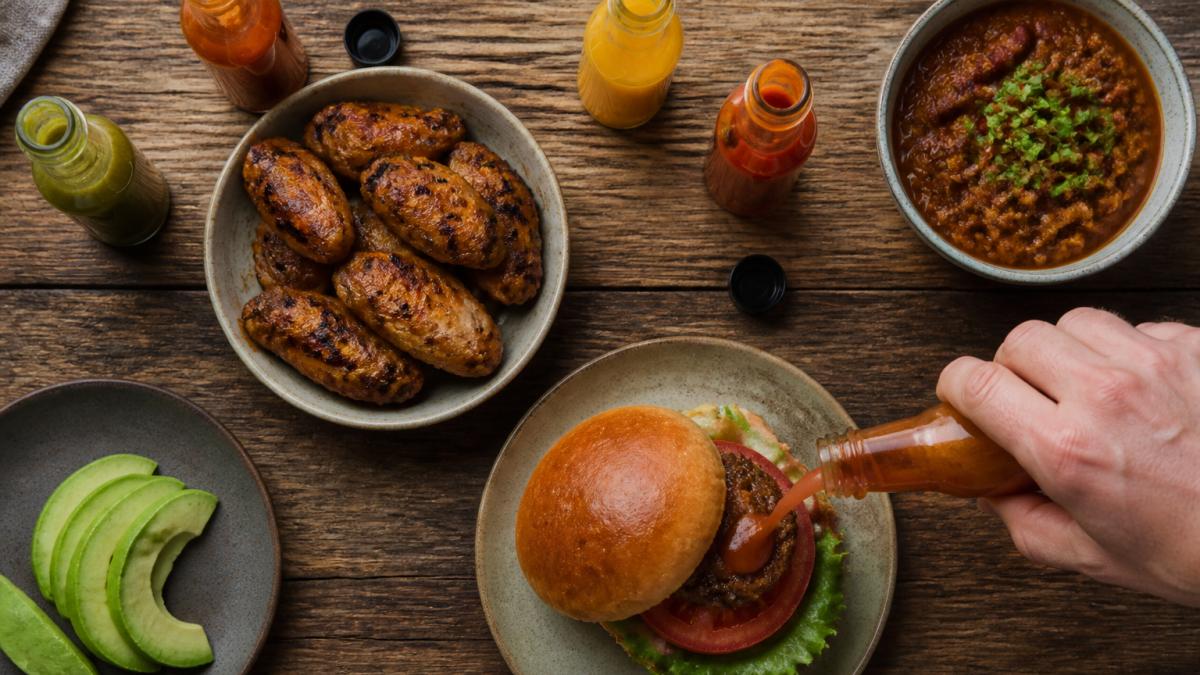
Meat, Poultry, and Barbecue
Grilled and smoked meats can take bolder, hotter sauces. The char and fat soften sharp heat, and the Maillard crust gives the sauce something to cling to.
- Wings and ribs: Ball Kicker. Its orange habanero, garlic, and citrus cut through rendered fat without burying the meat.
- Steak: Blackbeard's Revenge in a small drizzle, or Mango Chipotle if you want the smoke to echo the grill without the burn.
- Pulled pork: Mango Chipotle. The mango sweetness plays against the vinegar tang of Carolina-style sauce.
- Barbecue chicken: Falling Iguana. Honey and orange juice mirror the sweet glaze already on the bird.
- Brisket: a vinegar-forward splash, applied at the table so the bark stays crisp.
For barbecue, drizzle at the table. The sauce stays fresh and you control the heat per bite. If you are glazing during the cook, brush it on in the last five minutes so the sugars in Mango Chipotle or Falling Iguana do not scorch.

Eggs, Pizza, Sandwiches, and Snacks
Breakfast and handheld foods want a tangy, medium sauce. Too much heat buries the egg or the bread.
- Eggs and breakfast: Falling Iguana. The Datil pepper, honey, and orange juice wake up the yolk without overpowering it.
- Pizza: Ball Kicker on the slice, not in the oven. Garlic and citrus hit the tomato and cheese directly.
- Burgers and sandwiches: mix Ball Kicker into mayonnaise for a fast spread.
- Fries, chips, and popcorn: a swirl of Mango Chipotle for sweet-heat, or Blackbeard's Revenge if you want the snack to fight back.
- Breakfast tacos: Mango Chipotle, drizzled over the eggs, not stirred in.
Mayonnaise is your secret weapon here. Whisk a spoonful of hot sauce into mayo and you get a creamy, spicy spread that works on almost any sandwich. Start with one teaspoon of sauce per quarter cup of mayo and adjust.
Vegetables, Soups, Beans, and Cheese
Vegetables, soups, and beans reward a sauce with real acidity. It brightens without overpowering.
- Roasted vegetables: Mango Chipotle. The fruit sugar brings out the natural sweetness of carrots, squash, and peppers.
- Avocado and toast: Falling Iguana on top, never mixed in, so the citrus stays bright.
- Soups and chili: stir a splash of Blackbeard's Revenge in near the end of cooking for heat that builds, or Ball Kicker at the table for a fresher kick.
- Beans: Ball Kicker. The vinegar tang cuts the earthy flavor.
- Cheese and dairy: Mango Chipotle. Sweet-heat balances rich, salty cheese.
- Green vegetables: a light drizzle of Ball Kicker, not a pour, so the sauce does not turn the plate bitter.
Dairy tames heat fast. If a dish runs too hot, a spoon of sour cream or a slice of cheese fixes it in seconds.
How to Pick a Heat Level Before You Commit
Most pairing guides skip this step: figuring out how much heat the dish, and the eater, can actually take. A common pattern is to sort sauces into three bands and match the band to the dish.
- Mild to medium (Mango Chipotle, Falling Iguana): good for eggs, fish, vegetables, and any dish where you want the food to lead.
- Medium to hot (Ball Kicker): good for wings, pizza, sandwiches, and fried foods that can absorb the heat.
- Very hot (Blackbeard's Revenge): good for steak, chili, and dishes with fat, dairy, or starch to buffer the burn.
Start with a quarter teaspoon on the side of the plate. Taste the food with the sauce, not the sauce alone. If the first bite is comfortable, add more. If it is not, you have lost nothing.
| Dish Type | Best Castaway Sauce | Why It Works |
|---|---|---|
| Meat and barbecue | Mango Chipotle or Blackbeard's Revenge | Smoke and fat buffer the heat |
| Eggs and breakfast | Falling Iguana | Honey and citrus lift the yolk |
| Pizza and sandwiches | Ball Kicker | Garlic and citrus cut the cheese |
| Vegetables and soups | Mango Chipotle or Ball Kicker | Fruit sugar and acid brighten |
| Cheese and dairy | Mango Chipotle | Sweet-heat balances salty richness |
How to Balance Spicy Food Without Losing Flavor
To balance spicy food, add fat, sweetness, or acid, never water. Water spreads the capsaicin around and makes the burn worse.
Here is how to cool a dish that went too far:
- Add fat: sour cream, butter, cheese, or mayo coats your mouth.
- Add sweetness: a pinch of sugar or honey rounds off sharp heat.
- Add acid: a squeeze of lime or a splash of vinegar restores balance.
- Add more base: stretch the dish with rice, beans, or bread.
The goal is not to kill the heat. It is to keep the flavor you built. A little dairy or citrus does that better than anything else.
Ways to Use Hot Sauce in Cooking (Not Just at the Table)
Hot sauce is an ingredient, not just a condiment. Cooking with it builds flavor into a dish instead of sitting on top.
Try these ways to use hot sauce in cooking:
- Marinades: whisk sauce with oil and citrus for chicken or steak.
- Glazes: brush on ribs or wings in the last few minutes.
- Vinaigrettes: shake sauce into oil and vinegar for salads.
- Soups and chili: stir a spoonful in near the end.
- Dips: blend into mayo, yogurt, or cream cheese.
Add hot sauce early for depth and late for a fresh kick. Many cooks do both: some in the pan, some on the plate.
The Best Hot Sauce for Different Foods: A Castaway Cheat Sheet
The best hot sauce for different foods depends on the dish's dominant flavor, not just how much heat you can handle.
Our four sauces cover the full range, from sweet-heat to serious fire. Here is where each one shines.
| Sauce | Flavor Profile | Best For | Price |
|---|---|---|---|
| Mango Chipotle | Sweet-heat, smoky | Grilled meats, tacos, roasted vegetables | $5.99 |
| Ball Kicker | Bright, moderately spicy | Wings, sandwiches, pizza | $5.99 |
| Falling Iguana | Smoky, honey-orange | Chicken, fish, breakfast | $5.99 |
| Blackbeard's Revenge | Punishing heat, citrus | Steak, chili, heat seekers | $11.99 |
Mango Chipotle leads with ripe mango and smoky chipotle. It is our pick for grilled meats, tacos, and roasted vegetables, and it doubles as a dipping sauce or marinade.

Ball Kicker brings orange habanero, garlic, and citrus. It adds a bright note to wings, sandwiches, and pizza without overwhelming them.
Falling Iguana pairs the regional Datil pepper with honey and orange juice. It is the sauce we reach for on chicken, fish, and breakfast plates.
Blackbeard's Revenge is our flagship and our hottest. It layers citrus, a blend of chili peppers, and garlic with real, punishing heat. Not for the faint of heart.
If you are new to heat, start with a sweet-heat sauce and work up. There is no prize for burning your mouth out on the first bottle.
Common Pairing Mistakes and How to Fix Them
Most pairing mistakes come from ignoring the dish and chasing heat instead. Here are the fixes.
- Drowning the food: use a drizzle, not a pour. You can always add more.
- Clashing flavors: a fruity sauce on a smoky dish fights itself. Match the notes.
- Adding heat with no balance: pair hot sauce with something creamy or sweet.
- Using one sauce for everything: keep two or three on hand for range.
- Skipping a taste test: try a drop before you commit the whole plate.
The fix for almost every mistake is the same: taste as you go. A drop on a spoon tells you more than any guide.
Frequently Asked Questions
How do you choose a hot sauce for a dish?
Start with the dish's dominant flavor. Rich, fatty foods like burgers or ribs handle smoky or vinegary sauces, while lighter dishes like eggs or vegetables work with fruity or citrusy options. Match the sauce's main note to the food, then adjust heat by adding a little at a time. For example, a mango chipotle sauce pairs well with grilled meats or tacos thanks to its sweet-smoke balance.
What foods pair well with sweet hot sauce?
Sweet hot sauces, like a mango-based option, complement foods that benefit from a contrast of sugar and heat. Try them on grilled chicken, pork, tacos, roasted vegetables, or even pizza. They also work as a dipping sauce or marinade. The natural fruit sweetness balances the spice, so you get flavor without overwhelming heat.
Should you add hot sauce before or after cooking?
Both work, but they do different things. Adding hot sauce during cooking lets the flavors meld into the dish, which is great for marinades, sauces, and soups. Adding it at the table preserves the sauce's fresh notes and lets each person control their heat. For the best of both, cook with a mild amount and offer extra at the table.
How can beginners try hot sauce without making food too spicy?
Start with a mild sauce and add a few drops to a single bite before committing. Mix a small amount into a condiment like mayonnaise or ketchup to dilute the heat. Taste as you go. If a dish gets too spicy, add dairy, a squeeze of citrus, or a pinch of sugar to balance it. Gradually increase the amount as your tolerance builds.
Pairing hot sauce with food is a skill you build one meal at a time, and the right bottle makes it easy. At Castaway Sauce Company, we built our range to cover every palate, from the sweet-heat of Mango Chipotle to the punishing fire of Blackbeard's Revenge, all restaurant-tested and ready for your kitchen. Grab a bottle, start with a drizzle, and taste your way to the perfect match. Add to cart and turn your next meal into an adventure.