

Is Expensive Hot Sauce Worth It: A Honest Breakdown
Table of Contents
- The Real Cost: What You're Actually Paying For
- Why Is Hot Sauce So Expensive: Breaking Down Premium Pricing
- Small-Batch Hot Sauce vs Grocery Store Staples
- Best Hot Sauce for Flavor: Taste and Complexity Matter
- Heat Level, Versatility, and Everyday Use
- Price Per Serving: Does Premium Justify the Cost?
- The Verdict: Who Should Buy Premium Sauce
- Frequently Asked Questions
Last Updated: October 7, 2026
The Real Cost: What You're Actually Paying For
A premium bottle isn't just heat and flavor, it's regionally sourced ingredients, production methods that preserve complexity, and time spent perfecting a recipe, which is why expensive hot sauce worth it depends on what you value.
The price gap between a grocery staple and an artisanal bottle comes down to factors that affect what lands on your plate. Small-batch producers source peppers from specific growers, use traditional fermentation or cooking techniques, and skip the preservatives and thickeners mass-market brands rely on.
Comparing a five-dollar bottle to a twelve-dollar one is often comparing standardized, shelf-stable formulas to recipes designed to highlight the natural complexity of peppers. Premium sauces have shorter ingredient lists and avoid high-fructose corn syrup, artificial flavors, and excessive sodium, simplicity that costs more upfront because it requires better raw materials and more careful production.
The real question isn't whether expensive hot sauce is worth it in absolute terms, it's whether the specific qualities you're paying for align with how you actually use hot sauce.
Why Is Hot Sauce So Expensive: Breaking Down Premium Pricing
Why is hot sauce so expensive when you're just mixing peppers and vinegar? The answer is everything that goes into a bottle beyond the obvious ingredients.
Small-batch producers face costs that mass-market brands spread across millions of bottles. Castaway Sauce Company uses regional ingredients like Florida orange juice in Falling Iguana and carefully selected chili peppers in Blackbeard's Revenge.

Fermentation and aging add time and storage costs. Some premium sauces ferment for months, developing deeper flavors quick-cooked versions can't match, tying up inventory, requiring temperature-controlled storage, and demanding expertise. Bottling, labeling, and shipping from a smaller operation also cost more per unit than a massive production line.
Labor matters too: recipe development, quality control, and small-batch cooking require skilled hands. A large corporation spreads those costs across millions of units; a craft producer across thousands.
Packaging contributes too. Artisanal hot sauce often comes in glass bottles with custom labels, which cost significantly more than plastic squeeze bottles, presentation that signals quality but also reflects real material costs.
Small-Batch Hot Sauce vs Grocery Store Staples
The gap between small-batch hot sauce and grocery store shelves isn't marketing, it's a difference in approach and ingredients.
Grocery store hot sauces are engineered for consistency and shelf stability, identical bottle to bottle, year after year, surviving months on a shelf. That requires stabilizers, preservatives, and often added sugars to balance heat and vinegar.
Small-batch sauces prioritize flavor complexity and ingredient quality. They use fewer additives, rely on natural preservation through fermentation or high acid, and often taste different bottle to bottle because they're made in smaller runs without standardization.
The flavor difference shows up immediately. A grocery store sauce delivers straightforward heat and vinegar; a small-batch sauce reveals layers, the sweetness of specific peppers, the brightness of citrus, the depth of garlic and spices. Castaway Sauce Company's Mango Chipotle, for instance, balances tropical sweetness with smoky heat.
Storage and shelf life differ too. Grocery store sauces last years unopened; small-batch sauces, especially without preservatives, have shorter shelf lives and often need refrigeration after opening. That's not a flaw, it's the consequence of real ingredients without chemical stabilizers.
Best Hot Sauce for Flavor: Taste and Complexity Matter
The best hot sauce for flavor isn't the hottest or the cheapest, it's the one delivering the taste profile you want.
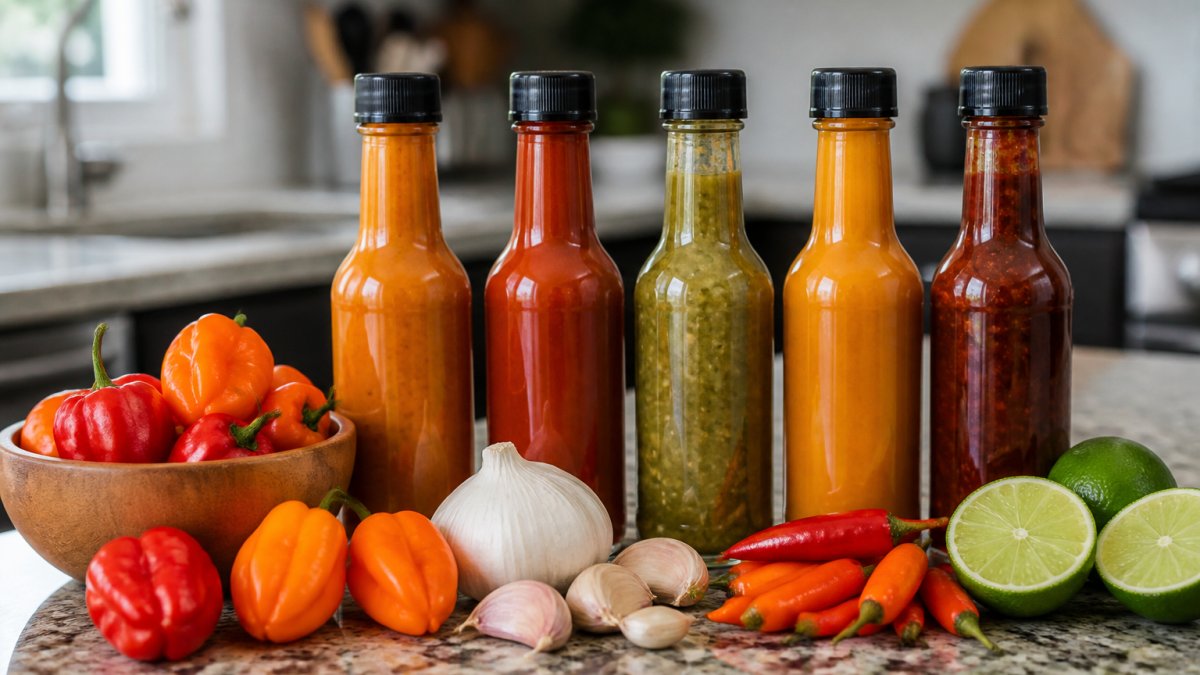
Flavor complexity comes from multiple sources working together. The type of pepper matters: habaneros bring fruity notes, datil peppers add smokiness, chipotles deliver depth. The acid, whether vinegar, citrus, or fermentation, shapes how the sauce hits your palate.
Ball Kicker combines orange habaneros, chiles d'arbol, citrus, and spices into a moderately spicy sauce that brightens food. Falling Iguana uses datil peppers and Florida orange juice for a slightly smoky, fruity profile.

When evaluating hot sauce for flavor, taste matters more than heat level. A sauce can be intensely hot and one-dimensional, or moderately spicy and reveal new flavors with each bite.
Versatility matters too. A sauce that works on eggs, tacos, and grilled meat is more valuable than one that only works on specific foods.
Heat Level, Versatility, and Everyday Use
Heat level and versatility determine whether you'll reach for a sauce regularly or let it sit in your pantry.
Many assume expensive hot sauce means extreme heat, but premium sauces span mild to inferno. Castaway Sauce Company offers options across the spectrum: Ball Kicker provides moderate spiciness, Mango Chipotle delivers sweet-heat balance, and Blackbeard's Revenge caters to heat seekers.
Everyday versatility is where premium hot sauce often wins. A well-designed sauce works on breakfast eggs, lunch tacos, dinner grilled meat, and late-night snacks, complementing rather than overpowering so you can use it multiple times a week without fatigue.
Heat tolerance varies widely. If you're buying expensive hot sauce, matching the heat level to your actual preferences matters more than buying the hottest option. A sauce you won't eat because it's too hot is wasted money, no matter the price.
The Shipwreck Set solves the versatility problem with multiple sauces across heat levels and flavor profiles, letting you choose based on mood, meal, and heat tolerance rather than settling for one sauce that compromises on all fronts.

Price Per Serving: Does Premium Justify the Cost?
Bottle price is the worst way to judge hot sauce value. What matters is cost per serving, and once you run that math, the premium-versus-budget gap narrows more than most shoppers expect.
Here's the framework: a standard 5-ounce bottle holds about 30 teaspoons. At roughly one teaspoon per serving, a reasonable pour for eggs, tacos, or chili, divide the bottle price by 30 for your true per-use cost.
| Tier | Typical bottle price | Bottle size | Cost per teaspoon |
|---|---|---|---|
| Mass-market grocery brand | $2-$4 | 5 oz | $0.07-$0.13 |
| Mid-tier craft brand | $6-$9 | 5 oz | $0.20-$0.30 |
| Premium small-batch | $10-$15 | 5 oz | $0.33-$0.50 |
| Limited-release / collector | $18-$30+ | 5 oz | $0.60-$1.00+ |
Those are typical street prices, not a specific brand's quote, check your local shelf or the producer's site for current figures. The point is the curve: grocery to craft is roughly 2-3x per serving, and craft to premium another 1.5-2x.
In annual terms: at three uses a week, 156 servings a year, the difference between a $0.10-per-serving grocery bottle and a $0.40-per-serving premium bottle is about $47 a year, one dinner out.
Shipping is another factor: many craft producers sell direct, and flat-rate shipping on a single bottle can add 30-50% to the landed cost. Buying a multi-bottle set or hitting a free-shipping threshold blunts that.
One more normalization: price per ounce. A 5-ounce bottle at $12 is $2.40 per ounce; a 10-ounce bottle at $15 is $1.50 per ounce. Larger formats from the same producer are often the cheapest way to buy premium quality, provided you'll finish the bottle before it fades. New to a brand? Start with the smallest size to test the flavor profile before committing to a larger format.
The Verdict: Who Should Buy Premium Sauce
Most articles on this topic end with a shrug, "it depends." Here's a decision framework you can run against your own habits in about two minutes.
Step 1: Score your usage frequency.
- Daily or near-daily: 3 points
- Several times a week: 2 points
- A few times a month: 1 point
- Rarely or never: 0 points
Step 2: Score your flavor sensitivity.
- You notice and care about ingredient differences in food: 3 points
- You notice sometimes, mostly with strong flavors: 2 points
- You mostly care about heat level: 1 point
- You cannot tell the difference and do not want to: 0 points
Step 3: Score your heat preference.
- You want layered, moderate heat you can use broadly: 3 points
- You want serious heat and seek it out: 2 points
- You want mild flavor with a gentle kick: 2 points
- You want the hottest thing available regardless of taste: 1 point
Step 4: Score your budget flexibility.
- A $15 condiment is a non-issue: 3 points
- A $15 condiment is fine if it lasts: 2 points
- A $15 condiment is a stretch: 1 point
- Every dollar counts: 0 points
How to read your score (out of 12):
- 9-12: Buy premium. Your habits and priorities line up with what premium sauce delivers. Start with a single bottle in a flavor profile you already know you like, then expand.
- 5-8: Buy selectively. Premium is worth it for one or two sauces you use constantly, but keep a budget staple on hand for high-volume cooking, marinades, and dishes where the nuance gets lost.
- 0-4: Stay with grocery-store options. You will not get enough value out of the premium tier to justify the price, and that is a legitimate answer, not a failure to appreciate good sauce.
A few specific reader profiles make the framework concrete:
The daily egg-and-taco eater. Uses hot sauce 5-7 times a week, notices flavor, wants moderate heat. Score: 11-12. Premium is clearly worth it. The per-serving premium is a few cents, and the flavor shows up in every meal.
The weekend griller. Uses hot sauce mainly on burgers and grilled meat, a few times a month. Score: 5-7. Buy one premium bottle for the grill, a cheap bottle for everything else.
The heat chaser. Wants maximum Scoville, doesn't care about nuance. Score: 3-5. Budget extract sauces deliver more raw heat per dollar than most premium craft bottles, premium isn't the right tool for this goal.
The curious beginner. Not sure what they like yet. Score: 4-6. Buy a variety pack or a mid-tier bottle before committing to a $15 single-origin sauce. You need data about your own palate before premium pricing makes sense.
A note on gifting. Premium hot sauce is one of the few food gifts that works for almost any recipient who likes spice, the bottle looks considered, the flavor is experiential, and the recipient can use it rather than store it. Buying for someone else? Prioritize a mid-heat, broadly versatile sauce over an extreme-heat novelty; they're far more likely to finish it.
The bottom line. Expensive hot sauce is worth it when three conditions overlap: you use hot sauce often, you can taste the difference, and you can absorb the price without resentment. When any one is missing, a grocery-store bottle is the smarter buy. Run your own score honestly, and the answer stops being a matter of opinion.
Frequently Asked Questions
Why is some hot sauce so expensive?
Premium hot sauces cost more because of ingredient quality, small-batch production methods, and recipe complexity. Artisanal makers use fresh peppers, regional spices, and hand-crafted processes instead of mass-production shortcuts. You're also paying for consistency, flavor depth, and the cost of sourcing specialty ingredients like datil peppers or aged chiles that grocery-store brands skip.
Does expensive hot sauce taste better than budget options?
Expensive hot sauce typically offers more flavor complexity and balance. Premium sauces use higher-quality ingredients and careful flavor layering, citrus notes, spice depth, and balanced heat instead of just capsaicin burn. Whether it tastes better depends on your palate, but most people notice a difference in smoothness, aftertaste, and how well the sauce complements food rather than overpowering it.
What makes small-batch hot sauce different from mass-market sauce?
Small-batch hot sauce uses fresh, often regional ingredients and manual production rather than industrial processing. Makers control fermentation times, ingredient ratios, and quality checks personally. Mass-market sauces prioritize shelf stability and cost reduction, often using vinegar as a preservative and thickeners for consistency. Small-batch sauces focus on flavor profile and ingredient integrity, resulting in more distinctive taste and texture.
Is expensive hot sauce worth it if I already have a favorite brand?
Worth it depends on what you're missing. If your current sauce works for everyday cooking, premium options make sense for specialty uses, grilling, dipping, or meals where flavor matters more. Premium sauces also work better as gifts or for trying new flavor profiles. Test a single bottle first rather than committing to multiple expensive bottles to avoid waste.