

Why Restaurant-Tested Sauces Are Better
Table of Contents
- What Makes Restaurant-Tested Sauces Stand Out
- The Science Behind Superior Flavor: Emulsification and Reduction
- Unique Hot Sauce Flavor Profiles: How Chefs Layer Complexity
- How to Balance Acidity in Sauces Like a Pro
- Professional Chef Sauce Secrets: Ingredients and Technique
- The Pasta Water Secret and Other Effective Tricks
- Why Home Sauces Fall Short (And How to Bridge the Gap)
- Frequently Asked Questions
Last Updated: October 2, 2026
What Makes Restaurant-Tested Sauces Stand Out
Restaurant-tested sauces are better because they're built on principles that home cooks rarely apply. The difference isn't just about heat or flavor, it's about intentional technique, ingredient quality, and understanding how flavors actually work together. When chefs develop a sauce for a restaurant kitchen, they're solving real problems: consistency across hundreds of servings, balance that survives hours on a warming station, and depth that makes people reach for seconds.
At Castaway Sauce Company, we've applied these restaurant principles to craft sauces that deliver what home cooks actually want: complexity, reliability, and the kind of flavor that transforms ordinary meals into something worth talking about. The gap between what you make at home and what arrives at your table in a restaurant comes down to specific choices, choices that separate good sauces from great ones.
The most obvious difference is intentionality. A restaurant-tested sauce has been refined through repetition, tasted by dozens of people, and adjusted until it hits a specific target. Home cooks often get one or two attempts before deciding a recipe works. That's the difference between a sauce that's "pretty good" and one that's genuinely excellent.
The Science Behind Superior Flavor: Emulsification and Reduction
Emulsification is what holds a sauce together at a molecular level. Without it, you end up with separated, watery results. Restaurant chefs understand that fat and liquid don't naturally mix, they need an emulsifier, something that bridges the gap. In tomato-based sauces, this often means allowing natural pectin to do the work, or using a small amount of fat strategically placed to coat the particles evenly. The key is understanding that emulsifiers work by having one end attracted to water and the other to fat, creating a stable suspension that feels smooth rather than greasy.
Reduction is equally critical, but the mechanism matters more than most home cooks realize. When you simmer a sauce for hours, you're not just cooking, you're concentrating flavor by removing water. A sauce reduced by half has roughly double the flavor intensity of the original. But reduction also triggers the Maillard reaction, a chemical process where amino acids and reducing sugars react under heat to create entirely new flavor compounds that don't exist in raw ingredients. This is why a sauce simmered for two hours tastes fundamentally different from one cooked for 20 minutes, even if the ingredients are identical.
The temperature at which you reduce matters enormously. A rolling boil (212°F) drives off volatile aromatic compounds, the very molecules that make a sauce smell and taste complex. These compounds have low boiling points and evaporate aggressively in high heat. A gentle simmer (around 180-190°F) allows the Maillard reaction to proceed while preserving aromatic volatiles. This is why restaurant kitchens use heavy-bottomed stockpots on medium heat rather than aggressive flame: the slower, more controlled reduction builds depth while keeping flavor compounds in the sauce where they belong.
Commercial kitchens also benefit from equipment that home stoves can't match. A restaurant-grade burner delivers consistent, even heat distribution across the entire bottom of a heavy-duty stockpot, preventing hot spots that can scorch aromatics or create uneven reduction. A home electric or gas range creates temperature variance that forces cooks to stir constantly to avoid burning. This constant stirring, while necessary for safety, actually disrupts the Maillard reaction by preventing sustained contact between ingredients and the pot surface. The result: home sauces often taste less developed, not because the technique is wrong, but because the equipment prevents optimal browning.
Most home cooks skip extended reduction altogether. They make a sauce in 20 minutes and wonder why it tastes thin. Restaurant kitchens start their sauces hours before service, letting time and heat do the work. The result is a sauce with actual mouthfeel, texture that coats your mouth and lingers, a direct product of both water loss and Maillard-driven complexity.
Unique Hot Sauce Flavor Profiles: How Chefs Layer Complexity
Professional chefs layer flavors deliberately. They don't just throw ingredients together and hope. Instead, they build in stages: aromatics first (sautéing garlic and peppers to release volatile oils), then acid to brighten and balance, then heat to add punch, then umami to anchor everything.
Umami, the savory fifth taste, is where amateur sauces fall short. A great hot sauce doesn't just burn; it satisfies. This comes from ingredients like tomato paste (cooked down to concentrate glutamates), garlic (especially when roasted), and sometimes fermented components that add depth. When you taste a restaurant-tested sauce, you notice it doesn't fade. The flavor sticks around because umami compounds create a lasting impression.
Heat layering matters too. A one-note hot sauce gets boring. The best sauces from professional kitchens use different chili peppers, some for immediate heat, others for lingering warmth, so the experience evolves as you eat. This is why Blackbeard's Revenge works: the initial citrus brightness hits first, then the chili heat follows, then the garlic and spice finish. It's a sequence, not a single blast.

How to Balance Acidity in Sauces Like a Pro
Acidity is the backbone of sauce balance. Too much and your sauce tastes sharp and one-dimensional. Too little and it tastes flat and heavy. Professionals aim for a specific acid level that brightens flavor without dominating it.
Most restaurant sauces sit around 0.5-0.7% acidity by weight, a range that feels balanced to the human palate. Home cooks often undershoot this, making sauces that taste dull, or overshoot, making them sour. The fix is tasting constantly as you adjust. Add acid slowly. Taste. Adjust. Repeat.
Citrus acid (from lime or lemon) behaves differently than vinegar acid. Citrus feels fresher and more immediate; vinegar feels sharper and more complex. A professional sauce often uses both, vinegar for depth, citrus for brightness. This combination creates the layered acidity that makes a sauce interesting rather than just sour.
Professional Chef Sauce Secrets: Ingredients and Technique
Restaurant chefs obsess over ingredient quality because it directly impacts flavor. A premium tomato paste tastes nothing like grocery-store versions, it's been cooked down longer, concentrating sugars and umami. Fresh garlic, peeled and minced just before use, delivers more punch than pre-minced jarred versions. These details compound. Such meticulous attention to heirloom ingredient quality reveals the profound difference that specific varieties make in the final depth of a sauce.
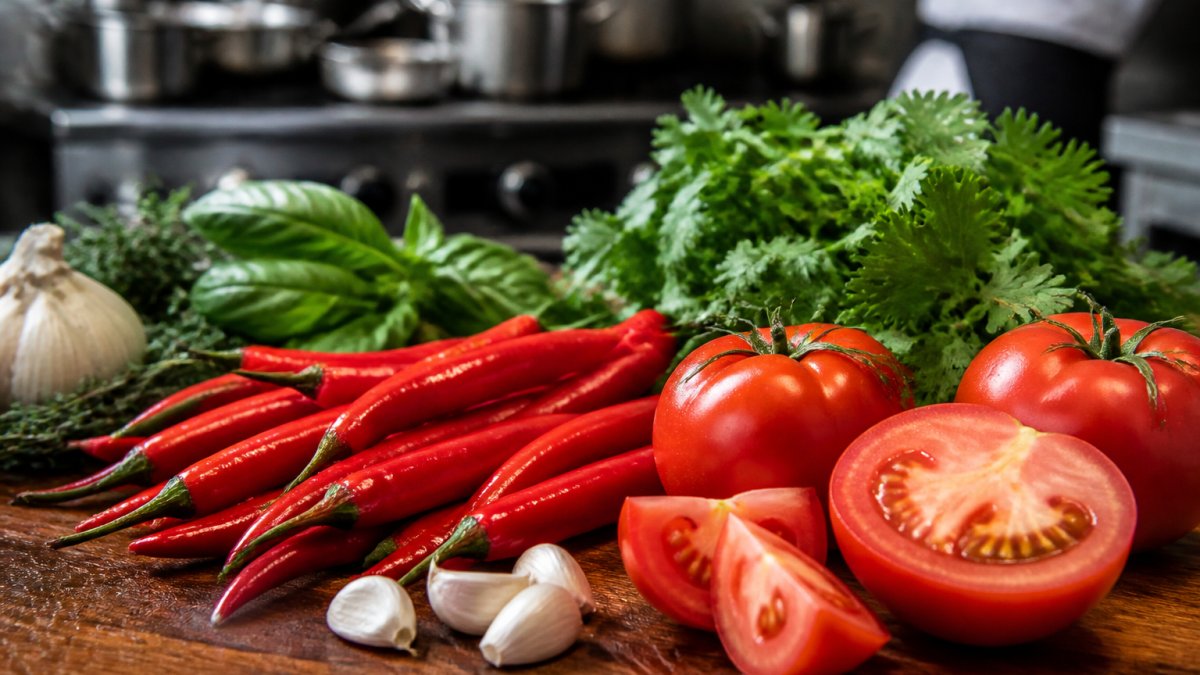
The technique matters equally. Sautéing aromatics in fat before adding liquid extracts flavor compounds that would otherwise stay locked in the raw ingredients. This is called the Maillard reaction in action, browning creates new flavor molecules that don't exist in raw form. It takes maybe five minutes but changes everything.
Simmering low and slow, rather than boiling aggressively, prevents flavor compounds from evaporating. A rolling boil drives off volatile aromatics. A gentle simmer lets them stay in the sauce where they belong. This is why restaurant sauces taste richer: they're cooked at the right temperature, not just cooked hot.
The Pasta Water Secret and Other Effective Tricks
Pasta water is starchy, salty, and one of the most underutilized tools in home cooking. When you add a splash of pasta water to a sauce, the starch acts as a natural binder through a process called starch gelatinization. As pasta cooks, it releases amylose and amylopectin, long-chain carbohydrates that, when heated in the presence of fat and liquid, swell and thicken the sauce. This starch doesn't just add body; it helps the sauce cling to pasta through mechanical adhesion, so the sauce coats each strand rather than sliding off into a pool at the bottom of the bowl.
The salt in pasta water is equally important. Most home cooks salt their pasta water to roughly the salinity of seawater (about 1-2% by weight). This salt is already balanced into the cooking water, so when you add pasta water to a sauce, you're introducing salt that's already calibrated for flavor rather than adding raw salt that can taste harsh. Restaurant kitchens exploit this deliberately: they reserve pasta water before draining, then use it as their primary liquid for adjusting sauce consistency and seasoning in the final moments before plating. A typical ratio is one ladle of pasta water (about 8 ounces) per 2 cups of sauce, added gradually while tasting.
The timing of pasta water addition matters. Add it too early and the starch can break down during prolonged simmering, losing its thickening power. Add it in the final 2-3 minutes before serving, when the sauce is at a rolling simmer. The starch will gelatinize immediately, thickening the sauce noticeably within 30 seconds. This is why restaurant plating looks so polished: the sauce clings to the pasta and doesn't separate, a direct result of starch chemistry that home cooks often overlook.
Another professional secret: finishing with fat.
Why Home Sauces Fall Short (And How to Bridge the Gap)
Home cooks often approach sauce-making as an afterthought. They follow a recipe, cook for the time listed, and call it done. This approach produces acceptable results, but rarely excellent ones. The gap exists because home kitchens lack the infrastructure of restaurants: no warming stations, no prep time measured in hours, no tasting panels to catch imbalances.
Frequently Asked Questions
What makes restaurant-tested sauces different from grocery store brands?
Restaurant-tested sauces are developed through rigorous culinary experimentation and refined through actual kitchen use. They use higher-quality ingredients, employ proper emulsification techniques, and balance acidity and heat with precision. Grocery store brands often prioritize shelf stability and cost reduction over flavor complexity. Restaurant-tested sauces like those from Castaway Sauce Company are formulated to deliver depth of flavor and mouthfeel that mass-produced versions simply can't match.
How do professional chefs balance acidity in sauces?
Chefs balance acidity by reducing tomato-based sauces slowly to concentrate flavors while neutralizing harsh acidity through natural caramelization and the Maillard reaction. This scientific approach prevents the 'watery' taste common in home-cooked sauces.
What's the difference between fresh and dried herbs in sauce development?
Dried herbs concentrate flavor through moisture loss, delivering intense aromatics in smaller quantities. Fresh herbs provide bright, immediate flavor but require larger amounts and shorter cooking times to prevent bitterness. The choice depends on the sauce's intended flavor profile and cooking method.
Why do restaurant sauces have richer texture and consistency than homemade versions?
Restaurant sauces achieve superior texture through proper reduction, emulsification, and starch integration. Extended simmering concentrates flavors while water evaporates, creating viscosity and mouthfeel. Chefs use starchy pasta water or tomato paste to bind ingredients naturally without artificial thickeners. Proper fat integration through emulsification creates a silky consistency that coats the palate. Home cooks often skip these steps or rush the process, resulting in thin, watery sauces. Restaurant-tested formulas like Blackbeard's Revenge are engineered for this professional-grade texture from the first spoonful.