

Adding Flavor to Bland Chicken Recipes: 7 Easy Steps
Table of Contents
- Why Chicken Turns Out Bland (and the Fix for Each Cause)
- How to Season Chicken Breast So It Never Tastes Flat Again
- Chicken Marinade Recipes That Actually Penetrate the Meat
- Cooking Techniques That Lock In Moisture and Tenderness
- Spice Rubs, Pan Sauces, and Glazes for Weeknight Chicken
- The Best Hot Sauce for Chicken: Matching Heat to Your Palate
- Common Mistakes That Keep Chicken Bland
- Frequently Asked Questions
Last Updated: September 11, 2026
Why Chicken Turns Out Bland (and the Fix for Each Cause)
Bland chicken recipes almost always trace back to one of four flavor gaps, and each has a specific fix for bland chicken recipes. According to USDA food safety guidance on poultry preparation, proper seasoning and cooking technique matter as much for quality as they do for safety. This guide breaks down the four culprits, then shows you exactly how to close each gap. Below, we'll walk through seasoning, marinating, cooking methods, and sauces so your chicken never tastes flat again.
The Four Flavor Gaps: Salt, Fat, Acid, and Heat
Salt penetrates meat and amplifies its natural flavor; without it, chicken tastes watery. Fat carries flavor compounds and keeps lean breast meat moist. Acid cuts richness and brightens dullness, which is why a squeeze of lemon juice transforms a plain cutlet. Heat drives the Maillard reaction, the browning that creates savory, roasted notes. Miss any one of these and the result is the same: chicken that tastes like nothing.
How to Season Chicken Breast So It Never Tastes Flat Again
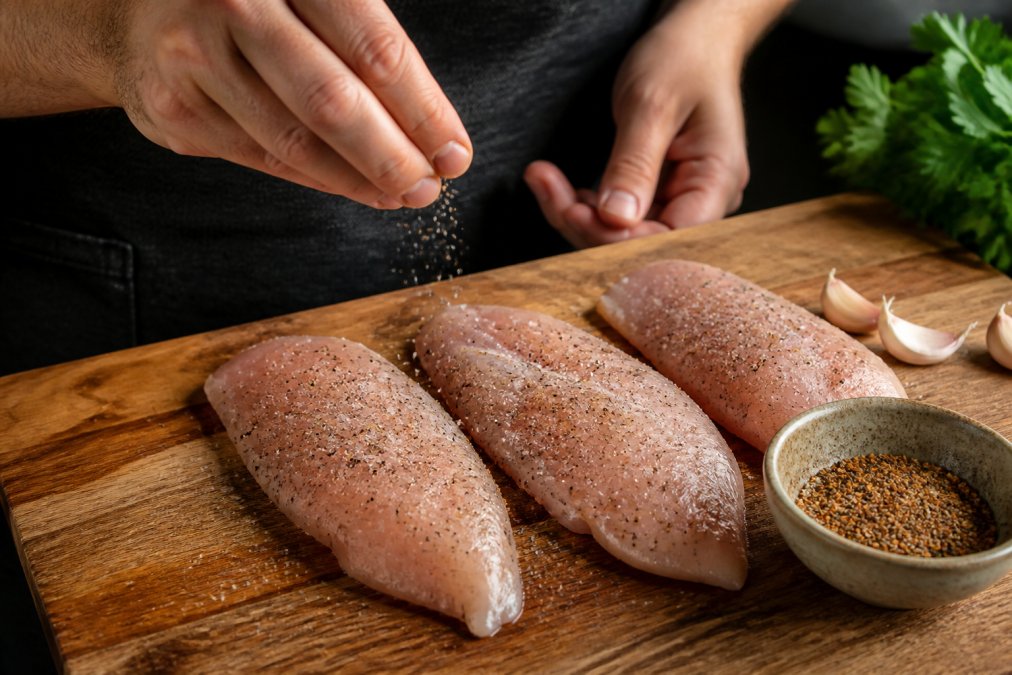
The most reliable way to season chicken breast is to salt it early and let the salt work into the meat, not just sit on the surface. A common mistake is salting seconds before the pan, which seasons only the outside. Give it time and the meat seasons itself.
Dry Brining vs. Wet Brining: Which One Works Better
Dry brining wins for weeknight cooking. Coat the chicken with salt (about 3/4 teaspoon per pound) and let it rest uncovered in the fridge for at least 30 minutes, ideally a few hours (seriouseats.com). The salt dissolves, draws out moisture, then reabsorbs it, seasoning the meat from within. Wet brining, submerging the chicken in salted water, adds water weight and works better for whole birds or lean cuts headed to the grill. Both methods improve tenderness; dry brining simply requires less cleanup and no bucket.
Chicken Marinade Recipes That Actually Penetrate the Meat
Marinades flavor the surface and slightly beyond, so the goal is balance, not a long soak. A useful framework is the three-part formula below, which works with almost any cuisine.
Acid, Oil, and Aromatics: The 3-Part Marinade Formula
Build every marinade from three components: an acid (citrus, vinegar, or yogurt), a fat (olive oil or buttermilk), and aromatics (garlic, herbs, spices). Use roughly two parts oil to one part acid, then season generously. Keep acidic marinades to 30 minutes to 2 hours; longer and the acid starts to break down the meat's texture. The USDA's poultry handling and preparation guidance is worth reviewing before any raw-meat prep.
| Component | Examples | Job |
|---|---|---|
| Acid | Lemon juice, vinegar, yogurt | Brightens, tenderizes surface |
| Fat | Olive oil, buttermilk | Carries flavor, retains moisture |
| Aromatics | Garlic, herbs, paprika | Builds the flavor profile |
Cooking Techniques That Lock In Moisture and Tenderness
The right technique depends on the cut, but it also depends on the equipment you actually own. Breast meat benefits from high heat and a quick cook; thighs and legs reward slower, gentler methods. Match the method to the meat, and moisture stays put. Match the method to your appliance, and flavor follows.
Why Texture Changes How You Taste Flavor
Flavor perception is not just about what is on the chicken, it is about how the chicken feels in your mouth. A crisp, browned exterior gives the tongue and nose more surface area to release savory compounds, which is why a seared thigh tastes more intensely chicken-y than a poached breast cooked with the same seasoning. A poached or gently simmered piece reads as milder and cleaner, which is useful when you want the sauce to lead. If a recipe tastes flat, the fix is sometimes texture, not more salt: pat the skin dry, sear hard, or broil the last two minutes to build a crust.
Equipment-Specific Flavor Playbook
Stovetop sear. Get the pan ripping hot, a drop of water should evaporate on contact, before the chicken goes in. A hard sear drives the Maillard reaction, the browning between amino acids and sugars that creates roasted, savory notes. Sear skin-side down first, then flip. Do not crowd the pan; steam is the enemy of crust.
Air fryer. The concentrated fan-driven heat browns faster than a standard oven, so rubs with a little sugar or paprika can scorch. Use a dry rub with no sugar, set the temperature to about 375°F, and flip halfway. The circulating air also dries the surface, which helps a spice crust adhere without oil.
Slow cooker. Moist, enclosed heat mutes browning, so build flavor before the lid goes on. Brown the chicken in a skillet first, then deglaze that pan with broth and pour the liquid into the slow cooker. Add aromatics, garlic, onion, bay, dried chile, at the start, and finish with acid (lime, vinegar) at the end, since long cooking dulls bright notes.
Oven roasting. A hot oven (425°F) on a sheet pan with space between pieces gives you crisp skin and rendered fat. A lower oven (325°F) gives you juicier meat but paler skin. Choose based on whether you want texture or tenderness to lead.
Whichever method you choose, let the chicken rest for 5 to 10 minutes before slicing so the juices redistribute instead of running onto the board.
Spice Rubs, Pan Sauces, and Glazes for Weeknight Chicken
A spice rub adds a crust; a pan sauce adds a finish. Together they turn a plain breast into something worth repeating. A dry rub of paprika, chili powder, garlic powder, salt, and pepper coats the meat before it hits the pan.
Deglazing and Reduction: Building a Pan Sauce in 5 Minutes
After searing, pour a splash of vinegar or citrus into the hot pan and scrape up the browned bits, a step called deglazing. Add a knob of butter and let it reduce for a minute or two. The result is a glossy pan sauce that carries all the flavor left in the skillet. This is the fastest way to rescue chicken that's cooked correctly but tastes plain.
The Best Hot Sauce for Chicken: Matching Heat to Your Palate
The best hot sauce for chicken is the one that matches your heat tolerance and the flavor profile of the dish. But "best" is not a single bottle, it is a style. Vinegar-forward sauces (the classic cayenne-and-vinegar profile) cut through fried or roasted chicken and wake up the palate. Sweet-heat sauces (honey, brown sugar, or fruit base) glaze well on grilled or baked pieces because the sugars caramelize under heat. Chile-forward sauces with smoky or fruity notes complement marinades and dry rubs. A sauce is the final layer of flavor, not a rescue mission for dry meat.
How to Match Sauce Style to the Dish
| Dish style | Sauce style that works | Why |
|---|---|---|
| Fried or roasted | Vinegar-forward | Acid cuts richness and resets the palate |
| Grilled or baked | Sweet-heat glaze | Sugars caramelize and cling to the surface |
| Poached or shredded | Chile-forward, thinner | Coats evenly without overwhelming mild meat |
| Sandwiches and wraps | Creamy or fruit-based | Balances bread and adds moisture |
Dietary-Specific Flavor Hacks
If you are watching sodium, keto, or dairy, sauce is where bland chicken gets rescued without breaking the plan.
Low-sodium. Skip the salt shaker and lean on acid and aromatics. A squeeze of lime, a splash of rice vinegar, or a spoonful of chopped garlic and fresh chile adds perceived saltiness without the sodium. Toasted spices, cumin, coriander, smoked paprika, also read as "seasoned" even when salt is light.
Keto and low-carb. Avoid sugary glazes and honey-based sauces. Build flavor with fat and acid instead: a pan sauce of butter, pan drippings, and a splash of vinegar has almost no carbs and tastes rich. Dry rubs with no sugar are safe and effective.
Dairy-free. Buttermilk and yogurt marinades are common, but coconut milk, olive oil, and citrus work just as well. A coconut-milk marinade with lime, garlic, and ginger tenderizes and flavors without dairy.
Finishing Touches That Add Flavor Without Heat
Not every finish needs to be spicy. A drizzle of good olive oil, a shower of fresh herbs, a squeeze of lemon, or a sprinkle of toasted sesame seeds adds aroma and contrast. These are the moves that make a plain chicken breast taste intentional rather than improvised.
Common Mistakes That Keep Chicken Bland
The biggest mistake is under-seasoning out of caution, which leaves chicken flat no matter how well it's cooked. Other frequent errors: marinating in acid too long, skipping the rest, and cooking cold chicken straight from the fridge. A dry rub applied the night before gives salt time to work. Cooking from room temperature helps the meat cook evenly. And always taste the sauce before serving, adjusting acid and salt to balance the heat.
Frequently Asked Questions
How do I make bland chicken better without a lot of prep time?
Start with a dry brine: salt the chicken 30 to 45 minutes before cooking and let it sit at room temperature. The salt draws out moisture, dissolves, and gets reabsorbed, seasoning the meat from the inside. While it rests, mix a quick spice rub with paprika, garlic powder, and chili powder. After cooking, finish with a squeeze of lemon juice or a splash of hot sauce to wake up the flavor profile.
What can I add to chicken to give it more flavor?
Salt, fat, acid, and heat are the four levers. Salt through brining or dry rubs, fat through butter or olive oil basting, acid through citrus zest or vinegar, and heat through chili powder, cayenne, or a vinegar-based hot sauce. Aromatics like garlic, onion, and fresh herbs add depth. Combining at least three of these in one dish prevents the flat, one-note taste that plain chicken often has.
Can hot sauce be used as a marinade for chicken?
Yes, but balance matters. Vinegar-based hot sauces work as both an acid and a flavor base in a marinade. Mix roughly equal parts hot sauce, oil, and a touch of something sweet like honey or brown sugar. Marinate chicken breasts for 30 minutes to 2 hours. Longer than that, and the acid can break down the surface texture, making the meat mushy rather than tender.
How to make chicken taste more flavorful if I'm watching sodium?
Skip the heavy salt and lean on acid and aromatics instead. Lemon juice, lime zest, and vinegar brighten chicken without sodium. Garlic, ginger, smoked paprika, and fresh herbs build layers of flavor. A vinegar-forward hot sauce adds tang with less salt than soy-based marinades. Roasting at higher heat also concentrates natural flavor through caramelization, so the chicken tastes richer without extra seasoning.
Bland chicken is a solvable problem, and it rarely takes more than a few deliberate steps. Castaway Sauce Company offers restaurant-tested hot sauces, from sweet to high heat, including the signature Blackbeard's Revenge featured on Man v Food Nation, to finish any dish with bold flavor. Start with the right seasoning and technique, then add a sauce that matches your heat tooth. Get started with Castaway Sauce Company and make every meal an adventure.